

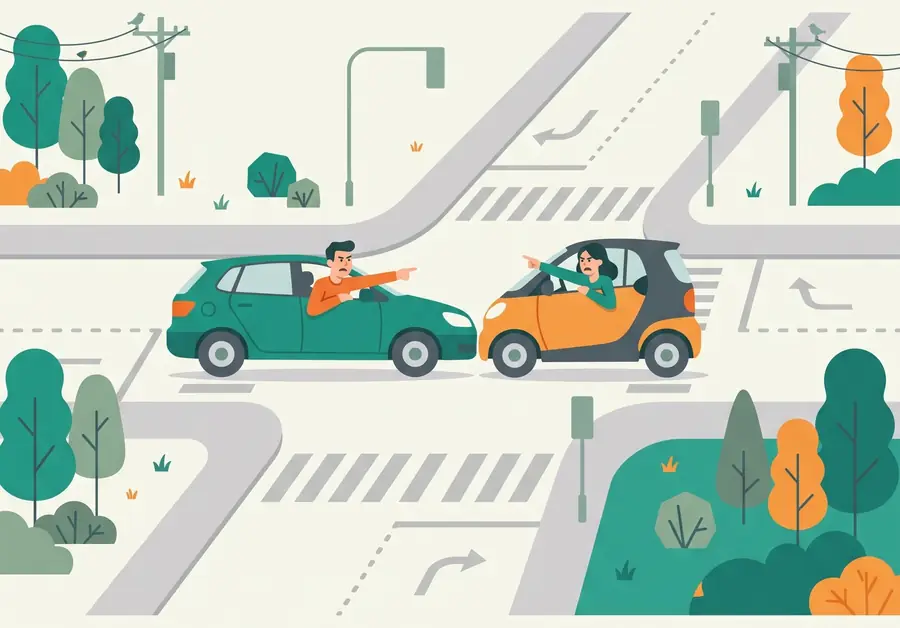
Someone cuts you off in traffic. Your first thought? What a careless driver. Ten minutes later, you cut someone off yourself. Your first thought? I didn't see them, I'm running late, it's been a long day.
Same action. Two completely different explanations: one for them, one for you.
This is one of the most common patterns in how people think, and once you notice it, you'll see it everywhere: in meetings, in family arguments, in group chats, and in the way we talk about people we have never even met.
The double standard we all carry
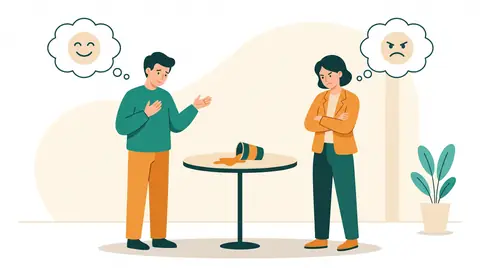
Psychologists have a name for it: the fundamental attribution error, and its close cousin, the actor–observer bias. When we explain other people's behaviour, we lean on their character: she's lazy, he's rude. When we explain our own, we lean on the situation: I was tired, the instructions were unclear.
Why? Mostly because of what we can see. From the inside, you have full access to your own intentions, your pressures and the hundred small things that went wrong this morning. From the outside, all you see of another person is the action itself. The context is invisible, so the mind fills the gap with the simplest story available: that's just who they are.
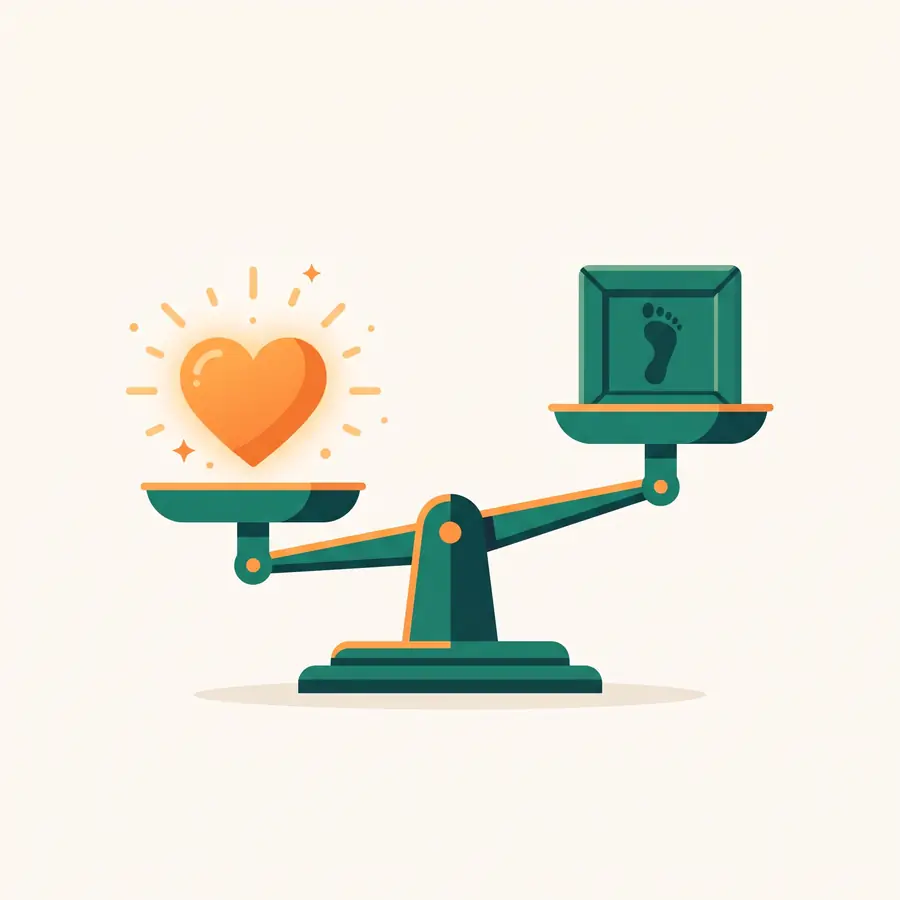
We judge ourselves by what we meant to do. We judge others by what they actually did.
Where it shows up
- At work: a colleague misses a deadline and seems unreliable; you miss one and it was the workload.
- In relationships: your partner forgets something important and it feels like they don't care; you forget and you were distracted.
- With money: a friend who is late repaying a loan is irresponsible; when you are late, things came up.
- In families: a parent's strictness reads as control; your own firmness with someone younger reads as care.
- Online: a stranger's angry comment proves what kind of person they are; yours was a reaction to provocation.
None of this makes us bad people. It makes us people with limited information, trying to make sense of things quickly.
Why it matters more than it seems
The bias doesn't just make us unfair in the moment. It shapes decisions. It decides whether we give someone a second chance, whether we speak up or stay silent, and whether a small conflict turns into a lasting grudge. Teams split over it. Friendships cool over it. Families carry it for years.
It also changes how we see ourselves. If every mistake we make is explained away by circumstances, we lose the chance to learn from it. And if every mistake others make is a verdict on their character, we lose the chance to understand them.
Four ways to catch yourself
- Ask "what would explain this if it were me?" Before settling on a judgement, give the other person the same excuses you would give yourself. You don't have to accept them, just consider them.
- Look for the missing context. What might be happening that you can't see? Pressure from someone else, a sick child, a sleepless night.
- Separate the action from the person. "That email was harsh" is a fair observation. "She is harsh" is a conclusion you may not have enough evidence for.
- Hold yourself to your own standard. When you catch yourself explaining away your own behaviour, ask whether you would accept the same explanation from someone else.
What your choices reveal
How quickly you reach for a judgement about someone's character, and when you choose to give the benefit of the doubt, says a lot about how you think. Some people default to fairness and pay for it with patience. Others default to accountability and pay for it in their relationships. Most of us switch, depending on who is involved and what is at stake.
That switching is exactly what ThinkAlike's short interactive stories explore. Instead of asking whether you are a fair person, they put you inside a situation, a colleague who took the credit or a friend who let you down, and let you choose. Your choices, not your self-description, build a picture of how you think.
Want to test your instincts first? Try 7 everyday dilemmas with no right answer, 7 workplace dilemmas, or see how a thinking style test without questions works.